
In modern industrial cooling systems, co
How to Calculate Cooling Tower Fill Volu
When the Original Cooling Tower Fill Is
In the cooling system maintenance for food and beverage market, the cooling tower may not be the first piece of equipment people think about. Production equipment gets the attention because it is directly connected with manufacturing output.
But the cooling tower can become a serious restriction when its internal fill gradually changes condition.
The problem is that a honeycomb fill does not always show its operating condition from the outside.
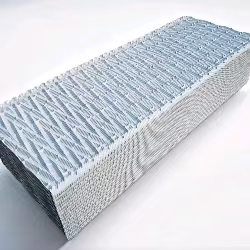
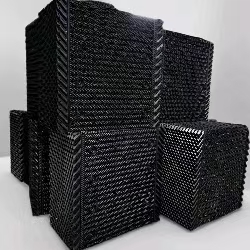
Honeycomb fill contains many narrow passages formed by the structured sheets.
During operation, water continuously moves through these passages. Depending on the circulating water condition, deposits can gradually accumulate on the surfaces.
The outside of the block may still look acceptable while the internal passages have become less open.
This is one reason why cooling tower media inspection should not be limited to taking a photograph of the front surface.
Cooling systems in food and beverage production often operate as part of a larger continuous production process. A reduction in cooling performance does not necessarily appear as an immediate failure of the fill.
Instead, operators may notice that the cooling tower gradually needs more operating time to reach the required condition, or that the system becomes less comfortable during higher production loads.
At that point, simply looking at the fill and saying “it is still there” is not a useful engineering assessment.
Where fouling is a recurring concern, the choice of fill structure deserves attention.
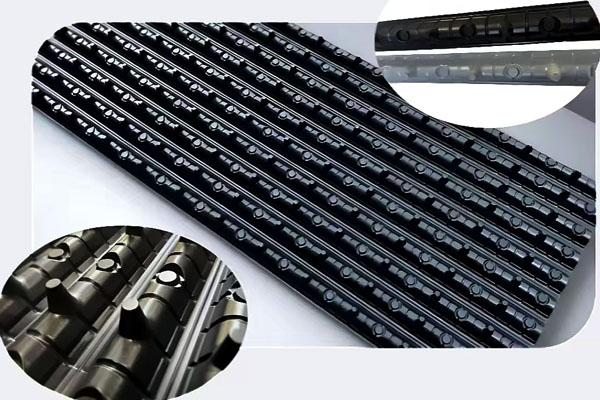
A splash-type configuration can provide a different internal passage arrangement from a tightly structured film surface. For applications where fouling resistance and water passage are important considerations, Splash Grid Fill for Fouling-Prone Cooling Towers is one configuration that can be evaluated.
The point is not that splash fill should automatically replace honeycomb fill. The point is that the operating water condition should be considered when deciding what type of cooling tower packing is practical.
A cooling tower may contain several fill areas with different conditions.
If one section is heavily affected while another remains usable, the replacement strategy can be more complicated than simply calculating the total tower volume.
There is a tendency to separate water treatment from fill selection.
In practice, the two are connected.
If the circulating water repeatedly produces deposits inside the fill, the structure selected for replacement needs to be considered in the context of that operating environment.
This is particularly relevant when the cooling tower supports production equipment that cannot easily tolerate unexpected changes in cooling performance.
Instead of asking whether the fill looks dirty, ask:
Those questions provide much more useful information when deciding whether the existing fill should remain in service or whether a different Cooling Tower Media arrangement should be considered.
Cooling tower fill media updates and technical insights for global industrial clients.
In modern industrial cooling systems, cooling tower fill plays a critical role in improving heat exc

Why Cooling Tower Fill in Food and Beverage Plants Needs a Different Kind of InspectionIn the coolin
Contact our team for cooling tower fill media details, quotations, and project support.
Chat on WhatsApp