
In modern industrial cooling systems, co
How to Calculate Cooling Tower Fill Volu
When the Original Cooling Tower Fill Is
When engineers compare cooling tower fill products, width and length are usually the first dimensions they look at. However, the vertical fill height can be just as important when evaluating how much effective heat-transfer space is available inside the tower.
A replacement fill may fit the existing footprint perfectly and still produce a different result if its effective fill depth or internal structure is substantially different.
Width and length determine how much horizontal area the fill occupies. These dimensions are essential for physical installation, but they do not describe the entire heat-transfer section.
The vertical dimension determines how much fill material is available along the water and airflow path.
It can be tempting to assume that adding more fill height will always improve cooling. In practice, the tower has to provide sufficient water distribution and airflow for the additional fill section to work properly.
Increasing fill height without considering airflow resistance, water loading, fan capacity, and tower structure may not deliver the expected improvement.
When replacing old fill, engineers should record the complete fill block dimensions rather than only the width and length.
Useful measurements include:
Current industry guidance similarly recommends recording fill height and operating conditions rather than relying only on the tower's nominal dimensions when selecting replacement media.
Cross-flow towers have their own internal airflow and water-distribution arrangement. The fill dimensions therefore need to match the actual section of the tower where air and water interact.
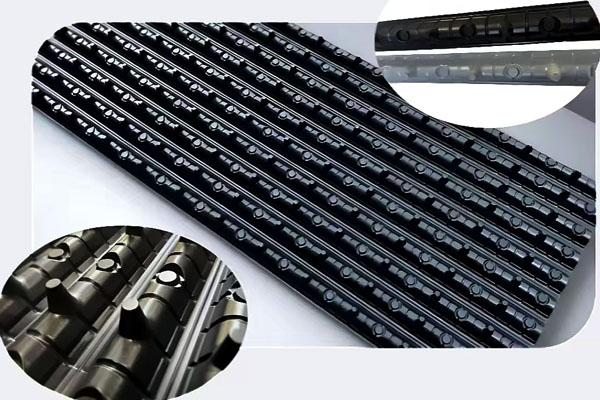
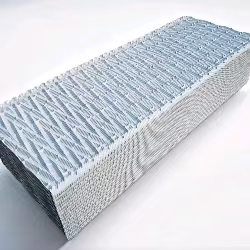
For projects requiring a relatively broad range of fill dimensions, 18mm Pitch Corrugated Fill with a Wide Selection of Available Widths provides a configuration that can be considered when the tower requires different dimensional arrangements.
Air has to move through the fill section. Any change in fill geometry or depth can affect the resistance experienced by the airflow.
If the new configuration creates substantially different airflow resistance from the original design, fan performance should be checked rather than assuming that the existing fan will operate under exactly the same conditions.
The amount of water passing through the fill is another important variable. A fill configuration that works at one water loading may not produce the same result when the circulating-water flow is increased significantly.
This is one reason why fill dimensions should be reviewed together with water flow and thermal duty.
Instead of asking only how large the fill footprint is, engineers should consider the effective fill volume available for heat and mass transfer.
This involves the footprint, fill height, internal geometry, and actual operating conditions.
Existing towers may have fixed elevations between the water distribution system, fill supports, air inlet, and drift eliminators. Increasing the fill height may therefore require structural modifications or changes elsewhere in the tower.
In a retrofit project, maintaining the existing tower geometry can sometimes be more practical than trying to add fill height without reviewing the complete system.
Fill footprint and fill height answer different engineering questions. Width and length determine where the fill can be installed, while height influences the available transfer path through the fill.
For a replacement or upgrade project, both should be evaluated together with water flow, airflow, heat load, and tower structure before the final fill configuration is selected.
Cooling tower fill media updates and technical insights for global industrial clients.
In modern industrial cooling systems, cooling tower fill plays a critical role in improving heat exc

Does Cooling Tower Fill Height Matter More Than Fill Footprint?When engineers compare cooling tower
Contact our team for cooling tower fill media details, quotations, and project support.
Chat on WhatsApp