
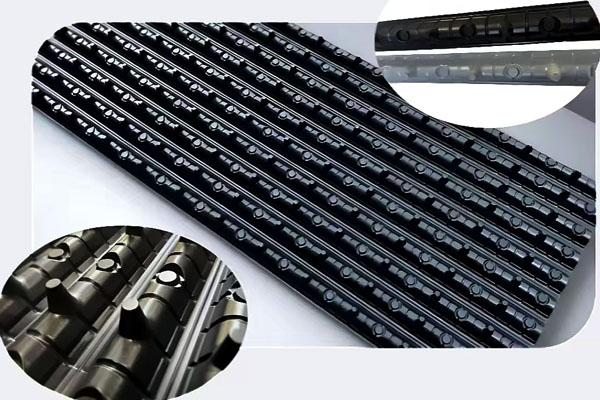
In modern industrial cooling systems, co
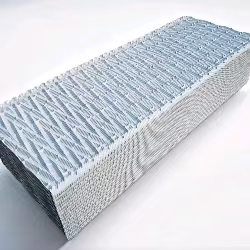
How to Calculate Cooling Tower Fill Volu
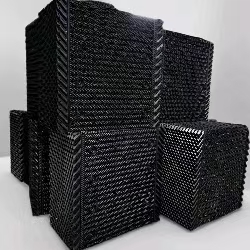
When the Original Cooling Tower Fill Is
Industrial facilities sometimes increase production without replacing the complete cooling tower. The existing tower may then be asked to remove more heat than it originally handled.
In this situation, replacing the cooling tower fill can be part of the upgrade, but engineers should first determine whether the existing tower has enough overall capacity for the new operating requirement.
If a production process generates more heat after expansion, the cooling tower may need to reject more heat while maintaining a similar cold-water temperature.
This changes the engineering basis for the fill. The old fill specification may have been appropriate for the original duty but not necessarily for the new one.
The first step should be to establish the current and proposed operating conditions.
These values provide a much better basis for evaluating whether a fill change is likely to address the new requirement.
If the tower structure has enough available capacity, an improved fill configuration may help the tower make better use of its existing heat-transfer section.
For cross-flow projects, Multi-Width Honeycomb Cooling Tower Fill for Different Tower Configurations can be considered when the existing tower requires a particular combination of fill dimensions.
However, changing fill alone cannot compensate for a fundamental shortage of airflow or water-handling capacity.
More cooling duty generally requires the tower to move enough air and water through the heat-transfer section. If the existing fan system is already operating near its design limit, changing the fill geometry may not provide the required additional capacity.
The fan, motor, airflow path, and fill pressure-drop characteristics should therefore be reviewed together.
Higher circulating-water flow can also place additional demands on the distribution system. Nozzles and distribution pipes need to provide appropriate coverage across the fill.
If the water distribution system was designed around the original production load, simply increasing the pump flow may create a different distribution pattern rather than uniformly increasing cooling.
Fill geometry and water loading need to be considered together. Increasing water flow changes the amount of water passing through the fill and may change the hydraulic condition of the tower.
For some applications, SteadyFlow 1000-1250 Cross-flow Fill may provide another dimensional option to evaluate when an existing cross-flow installation is being reviewed.
Some older cooling towers have enough structural space for an upgrade, while others were already operating close to their original design point.
Measurements and operating data should determine which situation applies. A visual inspection alone is not enough to establish whether the tower has meaningful spare capacity.
After an upgrade, engineers should compare the actual operating result with the new design requirement. Useful measurements include water temperatures, flow, wet-bulb temperature, fan operation, and the resulting approach.
This allows the team to determine whether the fill replacement produced the intended improvement or whether another component is limiting the tower.
Increasing production changes the cooling requirement, not just the fill specification. A fill upgrade can be useful when the existing tower has sufficient overall capacity but the heat-transfer section needs improvement.
When the fan, water distribution, structure, and thermal duty are reviewed together, engineers can determine whether a fill replacement is a realistic upgrade path or whether the tower requires a broader modification.
Cooling tower fill media updates and technical insights for global industrial clients.
In modern industrial cooling systems, cooling tower fill plays a critical role in improving heat exc

What Changes When an Existing Cooling Tower Has to Handle More Production?Industrial facilities some
Contact our team for cooling tower fill media details, quotations, and project support.
Chat on WhatsApp