
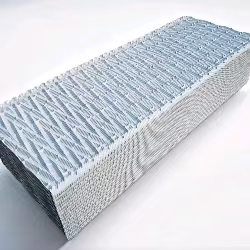
How to Calculate Cooling Tower Fill Volu
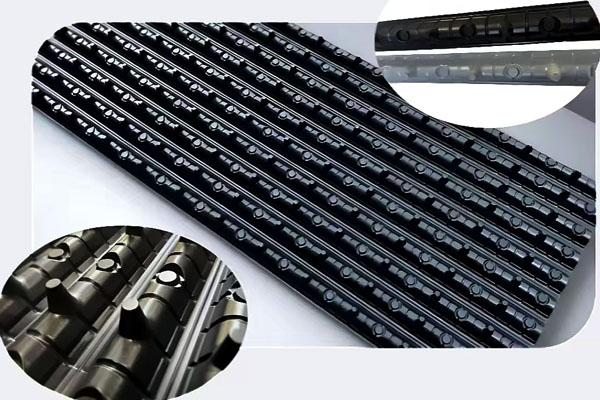
In modern industrial cooling systems, co
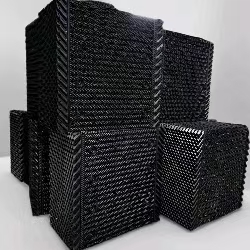
When the Original Cooling Tower Fill Is
When ordering Cooling Tower Fill for a new cooling tower project or replacement work, many customers focus only on the product name and price. However, the correct fill size, volume, and installation method are equally important for cooling performance.
Incorrect Cooling Tower Fill dimensions may cause installation problems, uneven water distribution, airflow issues, and reduced cooling efficiency. For this reason, engineers should confirm the required fill size before purchasing.
This guide explains the basic information needed to calculate Cooling Tower Fill volume, select suitable Cooling Tower Media, and prepare customized solutions for different cooling tower systems.
Cooling Tower Fill works as the main heat transfer surface inside the tower. The fill blocks must match the internal space of the cooling tower to ensure proper contact between air and water.
If the fill size is incorrect:
Professional cooling tower projects usually consider fill dimensions during the design stage to achieve the best balance between performance and operating cost.
Before selecting Cooling Fill, customers normally need to provide several important parameters.
The most basic information is the available installation space:
These measurements determine how many fill blocks are required for the cooling tower.
Different tower designs require different fill structures. Counterflow and crossflow cooling towers have different airflow directions, which influence the suitable Cooling Tower Media design.
For crossflow cooling towers, fill width is particularly important because the media must match the available installation space and water distribution arrangement. For example, 1010mm Width Cross-flow Fill can be considered when the existing tower requires a specific crossflow fill width.
For larger crossflow systems, options such as 1470mm Width Cross-flow Fill provide another practical reference when checking the available fill installation dimensions.
The basic calculation method is:
Fill Volume = Length × Width × Height
For example, if a cooling tower fill area is:
The required fill volume is approximately 2.4 cubic meters.
However, the actual quantity may change depending on fill structure, installation design, and supporting frame conditions.
Calculation is only one part of the selection process. The fill structure must also match the operating environment.
Film fill is commonly selected for clean water systems because it provides a large surface area for heat exchange.
The corrugated sheet design improves air and water contact, helping increase cooling efficiency.
Corrugated Fill creates many channels that guide airflow and water movement. The spacing and angle of the corrugation affect:
For cooling towers operating with poor water quality, splash-type media may be more suitable because it provides better resistance against blockage.
When selecting splash fill, engineers should also confirm the required block dimensions and available installation space before ordering.
Not every cooling tower uses standard fill dimensions. Many industrial towers require customized solutions because of different tower designs or replacement requirements.
A professional Cooling Tower Fill supplier should be able to provide:
For crossflow replacement projects, customers may also need to compare several standard widths before deciding whether a customized solution is necessary. The 500/625/750mm Full-spec Cross-flow Cooling Tower Fill provides a useful reference for projects where different standard fill widths need to be considered.
The material choice also affects the final performance of the cooling media. PVC and PP are commonly selected according to water quality, temperature, chemical conditions, and expected service life.
Low-cost products may use thinner material or lower-quality manufacturing processes, resulting in shorter service life.
The same Cooling Tower Media may perform differently depending on water quality. Always consider scaling, fouling, and chemical conditions.
Before ordering, confirm support structure, fill arrangement, fill width, and installation space to avoid problems during replacement.
Proper maintenance can extend the service life of cooling tower fill.
Correct Cooling Tower Fill size and volume calculation are important steps for achieving stable cooling performance. By considering tower dimensions, water conditions, material selection, and fill structure, engineers can choose a more suitable Cooling Tower Media solution.
For industrial customers, confirming the tower type, available fill dimensions, and installation requirements before ordering can reduce replacement problems and improve long-term cooling performance. When standard sizes do not match the existing tower, customized Cooling Tower Fill solutions can provide a more practical option.
Cooling tower fill media updates and technical insights for global industrial clients.
In modern industrial cooling systems, cooling tower fill plays a critical role in improving heat exc
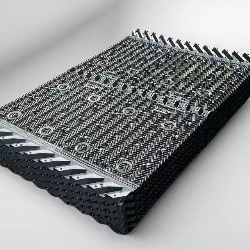
Why Is My Reconditioned Cooling Tower Underperforming After Installation? Check These Before Replaci
Contact our team for cooling tower fill media details, quotations, and project support.
Chat on WhatsApp