
How to Calculate Cooling Tower Fill Volu
In modern industrial cooling systems, co
When the Original Cooling Tower Fill Is
A cooling tower has just been reconditioned. The old fill has been removed, new media has been installed, and the equipment looks much better than it did before the shutdown.
Then the tower starts operating, and the outlet water temperature is still higher than expected.
This is frustrating, especially when the refurbishment involved a considerable amount of maintenance work.
Before assuming the replacement fill is defective, I would check several things that are frequently overlooked during cooling tower reconditioning.
The first question is whether the performance comparison is actually fair.
Cooling tower outlet temperature depends on circulating water flow, heat load, entering water temperature, ambient wet-bulb temperature, and airflow.
If the tower was tested under different conditions before and after refurbishment, the outlet temperatures cannot be compared directly.
For example, a higher ambient wet-bulb temperature can make the outlet water temperature higher even when the tower is operating correctly.
I would compare the actual operating conditions with the original design data before drawing conclusions about the new fill.
Not all cooling tower media has the same internal channel structure.
A replacement pack may have the correct external dimensions but a different corrugation geometry.
That change can influence airflow resistance and water distribution.
If the replacement media creates substantially different resistance from the original design, the fan may operate at a different airflow condition.
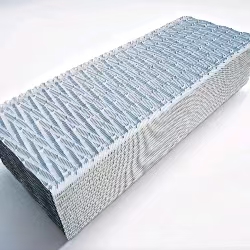
For crossflow applications, a product such as 16.5mm pitch fill media for different cooling tower layouts should be evaluated against the original media geometry and tower operating requirements.
The pitch alone is not enough to establish thermal equivalence.
During refurbishment, the maintenance team may focus heavily on replacing damaged plastic media.
However, the distribution system above the fill may receive less attention.
Partially blocked nozzles, uneven basin flow, or incorrect distribution arrangements can remain after the new fill is installed.
The result is that the new media receives water unevenly.
Some sections may operate close to their intended loading while others contribute much less to the cooling process.
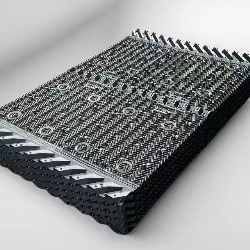
Structured fill sheets are designed to operate in a particular arrangement.
During installation, the corrugation direction and sheet orientation should follow the product's intended assembly method.
An incorrect arrangement may change the internal flow passages.
This is especially important when the replacement differs from the original product.
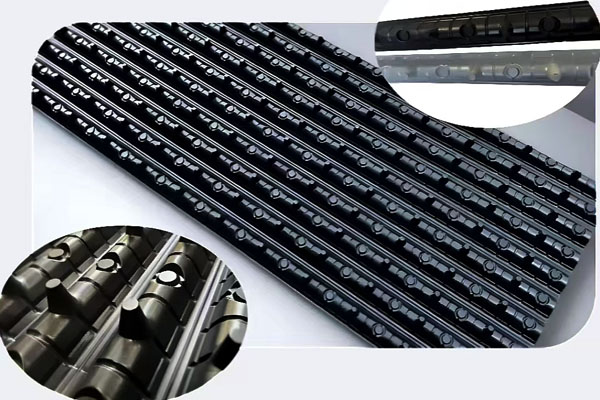
For towers using different fill sections, multi-specification cross flow cooling tower fill can be reviewed when checking the required dimensional arrangement.
Each section still needs to be installed according to its intended orientation and support method.
A reconditioned cooling tower may have new fill but still suffer from restricted airflow.
Damaged louvers, blocked air inlets, incorrect fan rotation, or mechanical problems can reduce the air moving through the tower.
If the fan was serviced during refurbishment, its operating condition should be verified.
A clean fill pack cannot compensate for insufficient airflow.
If the fill is structurally sound and correctly installed, replacing it again may only increase the project cost.
Instead, review the operating data, water distribution, airflow, and installation arrangement.
Where the original media specification is uncertain, the manufacturer should be asked to compare the replacement structure with the tower's design requirements.
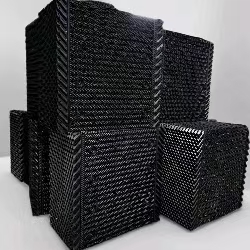
For applications involving larger fill sections, wide-format film fill for flexible cooling tower media configurations may be relevant when discussing alternative dimensions, provided the geometry and operating requirements are compatible.
When a reconditioned cooling tower underperforms after installation, don't immediately blame the new fill.
Confirm the operating conditions first, then inspect water distribution, airflow, and media installation.
If the replacement geometry differs from the original, ask the manufacturer to review the specifications.
A short technical review at this stage may prevent another unnecessary shutdown.
Cooling tower fill media updates and technical insights for global industrial clients.
In modern industrial cooling systems, cooling tower fill plays a critical role in improving heat exc
Why Is My Reconditioned Cooling Tower Underperforming After Installation? Check These Before Replaci
Contact our team for cooling tower fill media details, quotations, and project support.
Chat on WhatsApp