
How to Calculate Cooling Tower Fill Volu
In modern industrial cooling systems, co
When the Original Cooling Tower Fill Is
When it comes to improving the performance of an industrial cooling tower, many engineers focus on fans, pumps, and water circulation systems. However, one of the most important components that directly affects heat transfer efficiency is the cooling tower fill. A properly selected Cooling Tower Fill can significantly improve thermal performance, reduce operating costs, and extend the service life of the cooling tower system.
In many industrial projects across Southeast Asia, the Middle East, Japan, and Korea, cooling tower problems are often related to incorrect fill selection, aging media, poor material quality, or unsuitable structure design. Choosing the right Cooling Tower Media is not simply about finding a replacement part. It requires understanding the cooling tower type, water quality, operating conditions, and expected performance.
This article shares practical experience about different types of cooling tower fill, including Film Fill Cooling Tower solutions, Corrugated Fill designs, Splash Fill systems, materials, purchasing considerations, and maintenance methods.
Cooling Tower Fill is the internal heat transfer media installed inside a cooling tower. Its main purpose is to increase the contact area between hot circulating water and cooling air. By spreading water into thin films or small droplets, the fill improves evaporation efficiency and allows the cooling tower to remove more heat from the process water.
Simply speaking, the cooling tower fill works like a heat exchange surface. The more effectively the fill distributes water and air, the better the cooling performance will be.
Modern industrial cooling towers usually use two major types of Cooling Fill:
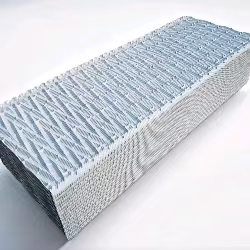
Film fill creates a thin layer of flowing water on the surface of the fill sheets. Air passes through the channels between the sheets, allowing efficient heat and mass transfer.
This type of fill is widely used because it provides a large surface area, high cooling efficiency, and compact design. Many factories choose film fill cooling tower systems because they can achieve better performance with a smaller tower footprint.
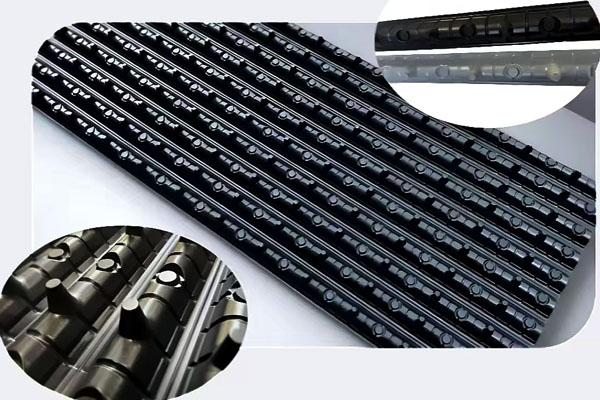
Splash fill works differently. Instead of creating a continuous water film, it breaks water into smaller droplets through repeated splashing. This design is suitable for applications where water quality is not ideal or where clogging resistance is more important than maximum thermal efficiency.
For wastewater treatment plants, steel plants, and industries with high suspended solids, Splash Grid Fill can often be a reliable solution.
Different cooling tower designs require different fill structures. Selecting the wrong tower fill may cause reduced airflow, poor heat exchange, or frequent maintenance problems.
In a counterflow cooling tower, air moves upward while water flows downward. The air and water move in opposite directions, creating an efficient heat transfer process.
For this type of tower, high-performance film fill is commonly selected because the vertical airflow direction works well with corrugated sheet designs.
For counterflow systems, the 500/625/750mm Full-spec Cross-flow Cooling Tower Fill can be considered when the project requires a suitable fill configuration for specific installation dimensions.
Crossflow cooling towers allow air to enter horizontally through the fill while water flows vertically downward. This structure provides easy maintenance access and is widely used in commercial and industrial cooling systems.
For crossflow systems, the fill design needs to provide stable water flow distribution and low resistance to airflow.
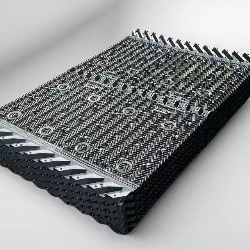
The 1470mm Width Cross-flow Fill is suitable for crossflow applications where the fill dimensions need to match the existing tower structure and installation requirements.
Large industrial cooling towers used in power plants, chemical factories, refineries, and manufacturing facilities usually require stronger and more durable cooling media.
Industrial users should consider:
The material of cooling tower fill directly affects durability, chemical resistance, and temperature performance. Different industries may require different materials.
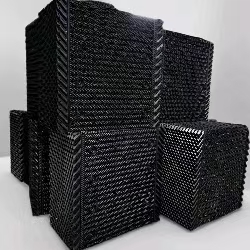
PVC is one of the most commonly used materials for cooling tower fill because it provides a good balance between cost and performance.
PVC cooling tower fill has advantages including:
For general industrial cooling towers, PVC cooling tower fill is still one of the most popular choices.
Polypropylene (PP) cooling tower fill is often selected for higher temperature applications or environments requiring better chemical resistance.
Compared with PVC, PP material can provide better temperature stability and longer service life under certain operating conditions.
Film Fill is currently one of the most widely used Cooling Tower Media designs. The sheets are manufactured with corrugated patterns that create many small channels.
These channels help:
Corrugated Fill uses specially designed wave patterns to guide water flow and air movement. The angle and spacing of corrugation directly influence performance.
A well-designed corrugated structure can provide excellent heat transfer while maintaining stable airflow.
For projects requiring a broader crossflow configuration, the SteadyFlow 1000-1250 Cross-flow Fill provides an option for matching different tower layouts and fill installation requirements.
Splash grid fill is normally built with grid-shaped layers. Water impacts the surface repeatedly and breaks into smaller droplets.
For applications with dirty water or high mineral content, splash fill can reduce blockage risks.
Cooling tower fill media updates and technical insights for global industrial clients.
In modern industrial cooling systems, cooling tower fill plays a critical role in improving heat exc
Why Is My Reconditioned Cooling Tower Underperforming After Installation? Check These Before Replaci
Contact our team for cooling tower fill media details, quotations, and project support.
Chat on WhatsApp