
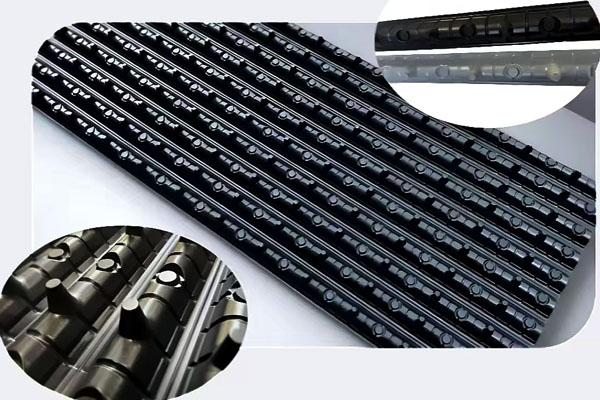
In modern industrial cooling systems, co
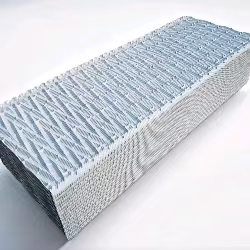
How to Calculate Cooling Tower Fill Volu
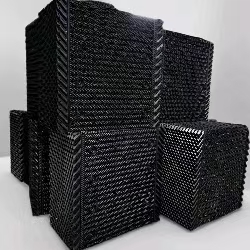
When the Original Cooling Tower Fill Is
A cooling tower fill can look clean during a routine inspection and still deliver poor cooling performance. No obvious collapse, heavy dirt, or major damage may be visible, yet the cold-water temperature continues to rise.
This is because visual condition is only one part of fill performance. Cooling Tower Media depends on effective water distribution, airflow, heat-transfer surface, internal fouling, material condition, and actual operating conditions.
Before replacing the fill, engineers should identify which of these factors is limiting performance. Replacing a product that is not the real cause only adds cost without solving the problem.
Cooling Tower Fill increases the contact area between air and water. In film-type structures, water spreads across the formed sheets while air passes through the fill, promoting evaporation and heat rejection.
Actual performance depends on several conditions working together:
A fill block can therefore appear acceptable while its effective heat-transfer performance has already declined.
The outside of a fill pack is not always representative of its internal condition. Scale, biological deposits, dust, and process contaminants can accumulate inside the formed channels.
These deposits reduce the available contact area and can increase airflow resistance. The result may be lower heat transfer even when the exposed surface looks relatively clean.
For this reason, inspection should include representative internal sections of the fill rather than relying only on the outer surface.
Plastic fill does not have to collapse before its performance becomes a concern. Long-term exposure to heat, chemicals, ultraviolet radiation, and mechanical stress can gradually change the material.
The fill may remain in its original shape while becoming brittle, losing structural strength, or becoming less suitable for the actual operating environment.
This is why service history matters when evaluating old Cooling Tower Media. Age, water chemistry, operating temperature, and maintenance records are often more useful than appearance alone.
Even correctly selected Cooling Tower Fill cannot perform properly without adequate water distribution.
If some areas receive excessive water while others remain poorly wetted, the available heat-transfer surface is not being used effectively.
Before replacing the fill, check:
A water-distribution problem can therefore produce symptoms that look like a fill problem.
Cooling performance also depends on sufficient and correctly distributed airflow. Fan degradation, blocked passages, structural changes, or incorrect fill installation can alter the air path through the tower.
This is particularly important in cross-flow towers, where air enters horizontally through the fill section. The fill geometry and installation arrangement must match the tower's airflow direction.
Cross-flow cooling towers require fill designed for horizontal air movement and downward water flow. The correct geometry helps maintain water spreading and air passage through the fill section.
For customers reviewing replacement options, Cooling tower fills should be selected according to tower type, existing dimensions, water conditions, and required thermal performance rather than appearance or price alone.
Where water distribution and heat-transfer efficiency are the main priorities, a properly matched cross-flow structure can provide a more stable air-water contact pattern.
Dual-spec High-efficiency Cross-flow Fill is designed for cross-flow applications where controlled water distribution and efficient air-water contact are important.
One of the most common retrofit errors is assuming that a visually similar fill will automatically fit the existing tower.
Engineers should confirm:
For cross-flow replacement projects, 16.5 Multi-width Cross-flow Fill provides multiple width options for different tower configurations, with customization available where existing dimensions require a closer match.
Not every existing tower follows the same fill dimensions or operating requirements. Older towers, replacement projects, and retrofit installations often require a fill specification matched to the existing structure rather than a standard size selected from a catalog.
Multi-Specification Cross Flow Cooling Tower Fill is suitable for cross-flow replacement and retrofit applications where dimensions, thickness, material, and installation conditions need to be matched to the existing tower.
A reliable diagnosis should start with operating data, not appearance alone.
This process helps separate a genuine fill problem from a water-distribution, airflow, or operating-condition problem.
For an accurate replacement recommendation, provide the cooling tower type, existing fill dimensions, operating temperature, water conditions, current performance, and clear photos of the existing fill.
For retrofit projects, drawings or the original fill specification are also useful. The more accurate the input data, the easier it is to select a fill that fits the tower and performs as intended.
A clean-looking Cooling Tower Fill is not proof that the fill is still performing correctly. Hidden fouling, aging, poor water distribution, and airflow changes can all reduce cooling performance without causing obvious visual damage.
The right approach is simple: measure the problem first, identify the limiting factor, then select the fill according to the tower and operating conditions. That is safer and more economical than replacing Cooling Tower Media based only on appearance.
Cooling Tower Fill should be evaluated by operating performance, not appearance alone. When cooling capacity declines, a complete check of water distribution, airflow, internal fouling, material condition, and fill geometry can prevent an unnecessary replacement.
For cross-flow cooling tower replacement projects, correct dimensions and structural compatibility are just as important as thermal performance. A properly matched fill gives the existing tower a better chance of recovering stable cooling performance and delivering reliable operation over the long term.
Cooling tower fill media updates and technical insights for global industrial clients.
In modern industrial cooling systems, cooling tower fill plays a critical role in improving heat exc

Why Cross-flow Fill Width Is More Than a Product DimensionWhen engineers discuss Cross-flow Cooling
Contact our team for cooling tower fill media details, quotations, and project support.
Chat on WhatsApp