
In modern industrial cooling systems, co
How to Calculate Cooling Tower Fill Volu
When the Original Cooling Tower Fill Is
When replacing Cooling Tower Fill during a retrofit, one question is often overlooked: should the existing Drift Eliminators also be replaced?
The answer is not always yes. If the eliminators are still structurally sound and meet the tower's operating requirements, they may not need replacement. But if they are aged, damaged, heavily fouled, or no longer provide effective drift control, leaving them in place can create unnecessary operating problems.
The practical approach is to inspect both components while the tower is already open. This avoids paying for access and labor twice.
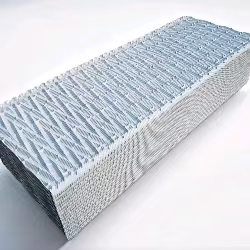
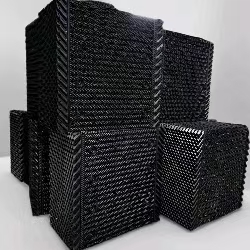
Cooling Tower Fill increases air-water contact inside the tower. In a film-type design, water spreads over formed plastic sheets while air passes through the channels, supporting evaporative heat transfer.
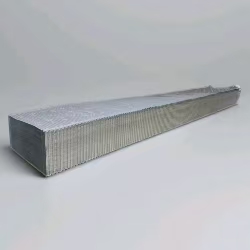
For cross-flow towers, fill geometry must match the horizontal airflow path and downward water flow. A suitable Cross-flow Cooling Tower Fill (Double-wave Design) can provide a stable contact surface while maintaining the intended airflow path.
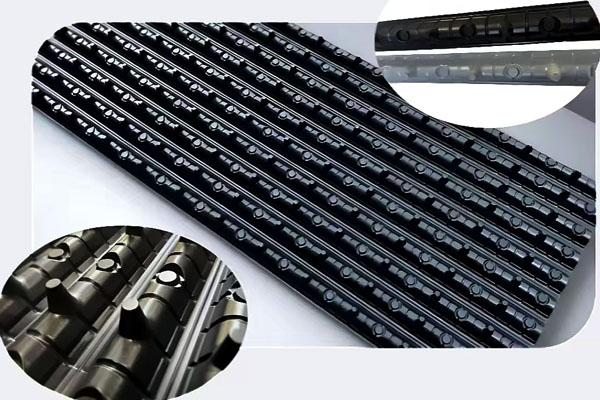
Drift Eliminators have a different purpose. They reduce the amount of entrained water droplets leaving the tower with the exhaust air.
They redirect the airflow so that larger droplets lose momentum and return to the tower. Damaged or blocked eliminators can increase water carryover and may raise makeup-water and chemical-treatment requirements.
There is no fixed replacement rule based only on age. Condition and operating requirements are more useful indicators.
Inspect the eliminators for:
If the eliminator structure remains intact and clean, replacement may provide little benefit. If significant deterioration is present, replacement during the fill retrofit is usually more practical.
Access is one of the biggest practical issues in cooling tower maintenance. When the tower is already opened for fill replacement, technicians can inspect components that are normally difficult to reach.
This allows the maintenance team to evaluate the fill, eliminators, water distribution, support structure, and airflow path during the same shutdown.
The objective is not to replace every component. It is to identify which components have actually reached the end of their useful service condition.
Cross-flow towers require fill designed specifically for horizontal air entry through the fill section. Incorrect geometry, orientation, or dimensions can change airflow resistance and water distribution.
When the existing fill is being replaced, confirm the original block width, length, height, thickness, support arrangement, and installation direction before ordering.
For towers requiring more installation flexibility, Dual-width Adaptable Cross-flow Fill can be considered where the existing tower configuration requires a fill specification that accommodates different width requirements.
A replacement fill does not need to be identical to the old product in every detail, but it must be compatible with the tower structure and operating requirements.
Before production, verify:
For projects using a 1010 mm fill width, 1010mm Width Cross-flow Fill provides a direct option for towers requiring this specific cross-flow configuration.
For larger cross-flow installations, 1470mm Width Cross-flow Fill is another option where the existing tower requires a wider fill configuration.
Not directly.
Drift Eliminators are primarily a water-loss control component, not a heat-transfer component. Their main performance indicators are drift control, structural condition, pressure loss, and resistance to fouling.
However, severely damaged or blocked eliminators can affect airflow and increase water carryover. In that situation, they become part of the overall retrofit assessment.
A new fill cannot correct a damaged water distribution system or severely deteriorated drift eliminators. The entire internal system should be inspected while access is available.
Width is important, but it is only one part of the specification. Fill height, length, thickness, pitch, airflow direction, support conditions, and water loading should also be checked.
If the tower is losing cooling capacity, first determine whether the cause is fill fouling, water distribution, airflow, fan performance, or another operating condition.
This prevents a retrofit from becoming an expensive component replacement with no measurable improvement.
For a reliable replacement recommendation, provide the cooling tower type, existing fill dimensions, operating temperature, water conditions, current cooling performance, and clear photos of the existing fill.
For older towers, drawings or the original fill specification are especially useful. Accurate dimensions reduce the risk of ordering a product that requires modification during installation.
Replacing Cooling Tower Fill does not automatically mean replacing Drift Eliminators. The correct decision depends on the condition of the eliminators and the requirements of the upgraded tower.
The best retrofit strategy is to inspect both while the tower is accessible, replace components that have genuinely reached the end of their service life, and match the new fill to the actual tower dimensions and airflow conditions.
This approach keeps the project focused on measurable performance, reliable installation, and long-term operating cost rather than unnecessary component replacement.
Drift Eliminators should be inspected whenever Cooling Tower Fill is replaced, but they do not automatically need to be replaced at the same time.
For cross-flow cooling towers, the priority is to match the replacement fill to the existing structure, airflow direction, water distribution, and operating requirements. A careful inspection before ordering is the simplest way to avoid installation problems and ensure the retrofit delivers the expected result.
When replacing Cooling Tower Fill during a retrofit, one question is often overlooked: should the existing Drift Eliminators also be replaced?
The answer is not always yes. If the eliminators are still structurally sound and meet the tower's operating requirements, they may not need replacement. But if they are aged, damaged, heavily fouled, or no longer provide effective drift control, leaving them in place can create unnecessary operating problems.
The practical approach is to inspect both components while the tower is already open. This avoids paying for access and labor twice.
Cooling Tower Fill increases air-water contact inside the tower. In a film-type design, water spreads over formed plastic sheets while air passes through the channels, supporting evaporative heat transfer.
For cross-flow towers, fill geometry must match the horizontal airflow path and downward water flow. A suitable Cross-flow Cooling Tower Fill (Double-wave Design) can provide a stable contact surface while maintaining the intended airflow path.
Drift Eliminators have a different purpose. They reduce the amount of entrained water droplets leaving the tower with the exhaust air.
They redirect the airflow so that larger droplets lose momentum and return to the tower. Damaged or blocked eliminators can increase water carryover and may raise makeup-water and chemical-treatment requirements.
There is no fixed replacement rule based only on age. Condition and operating requirements are more useful indicators.
Inspect the eliminators for:
If the eliminator structure remains intact and clean, replacement may provide little benefit. If significant deterioration is present, replacement during the fill retrofit is usually more practical.
Access is one of the biggest practical issues in cooling tower maintenance. When the tower is already opened for fill replacement, technicians can inspect components that are normally difficult to reach.
This allows the maintenance team to evaluate the fill, eliminators, water distribution, support structure, and airflow path during the same shutdown.
The objective is not to replace every component. It is to identify which components have actually reached the end of their useful service condition.
Cross-flow towers require fill designed specifically for horizontal air entry through the fill section. Incorrect geometry, orientation, or dimensions can change airflow resistance and water distribution.
When the existing fill is being replaced, confirm the original block width, length, height, thickness, support arrangement, and installation direction before ordering.
For towers requiring more installation flexibility, Dual-width Adaptable Cross-flow Fill can be considered where the existing tower configuration requires a fill specification that accommodates different width requirements.
A replacement fill does not need to be identical to the old product in every detail, but it must be compatible with the tower structure and operating requirements.
Before production, verify:
For projects using a 1010 mm fill width, 1010mm Width Cross-flow Fill provides a direct option for towers requiring this specific cross-flow configuration.
For larger cross-flow installations, 1470mm Width Cross-flow Fill is another option where the existing tower requires a wider fill configuration.
Not directly.
Drift Eliminators are primarily a water-loss control component, not a heat-transfer component. Their main performance indicators are drift control, structural condition, pressure loss, and resistance to fouling.
However, severely damaged or blocked eliminators can affect airflow and increase water carryover. In that situation, they become part of the overall retrofit assessment.
A new fill cannot correct a damaged water distribution system or severely deteriorated drift eliminators. The entire internal system should be inspected while access is available.
Width is important, but it is only one part of the specification. Fill height, length, thickness, pitch, airflow direction, support conditions, and water loading should also be checked.
If the tower is losing cooling capacity, first determine whether the cause is fill fouling, water distribution, airflow, fan performance, or another operating condition.
This prevents a retrofit from becoming an expensive component replacement with no measurable improvement.
For a reliable replacement recommendation, provide the cooling tower type, existing fill dimensions, operating temperature, water conditions, current cooling performance, and clear photos of the existing fill.
For older towers, drawings or the original fill specification are especially useful. Accurate dimensions reduce the risk of ordering a product that requires modification during installation.
Replacing Cooling Tower Fill does not automatically mean replacing Drift Eliminators. The correct decision depends on the condition of the eliminators and the requirements of the upgraded tower.
The best retrofit strategy is to inspect both while the tower is accessible, replace components that have genuinely reached the end of their service life, and match the new fill to the actual tower dimensions and airflow conditions.
This approach keeps the project focused on measurable performance, reliable installation, and long-term operating cost rather than unnecessary component replacement.
Drift Eliminators should be inspected whenever Cooling Tower Fill is replaced, but they do not automatically need to be replaced at the same time.
For cross-flow cooling towers, the priority is to match the replacement fill to the existing structure, airflow direction, water distribution, and operating requirements. A careful inspection before ordering is the simplest way to avoid installation problems and ensure the retrofit delivers the expected result.
Cooling tower fill media updates and technical insights for global industrial clients.
In modern industrial cooling systems, cooling tower fill plays a critical role in improving heat exc
Cooling Tower Fill Design Is Moving Toward More Flexible ConfigurationsCooling tower fill design is
Contact our team for cooling tower fill media details, quotations, and project support.
Chat on WhatsApp