
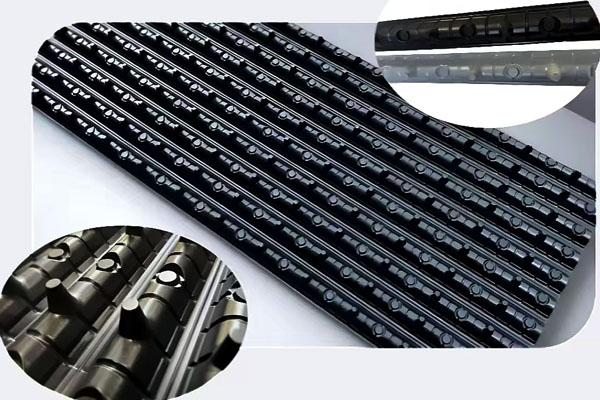
In modern industrial cooling systems, co
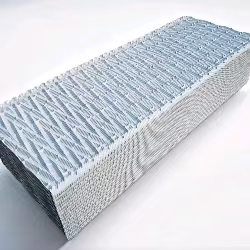
How to Calculate Cooling Tower Fill Volu
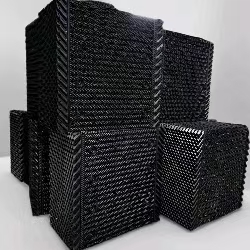
When the Original Cooling Tower Fill Is
Replacing cooling tower fill is normally expected to restore heat-transfer performance, but the cold-water temperature does not always improve as much as expected after a replacement. One useful way to investigate this situation is to look at the tower approach temperature.
The approach is the difference between the leaving cold-water temperature and the entering-air wet-bulb temperature. If the approach remains higher than expected, the fill should not automatically be blamed before the rest of the cooling system has been checked.
The first question is whether the tower is currently handling the same cooling duty as it was designed for. Industrial facilities sometimes increase production, change process conditions, or operate the tower at a higher circulating-water flow rate.
If the heat load has increased while the tower dimensions remain unchanged, installing new fill does not necessarily create additional tower capacity.
This is why a Cooling Tower Fills replacement should be evaluated against the current operating conditions rather than only the original specification.
Approach is affected by ambient wet-bulb temperature. A tower can therefore show a different approach on two different days even when its mechanical condition has not changed.
For meaningful comparison, engineers should record the entering-air wet-bulb condition together with entering-water temperature, leaving-water temperature, and circulating-water flow.
One of the easiest things to overlook after a fill replacement is the distribution system above the fill.
If nozzles are blocked, damaged, incorrectly positioned, or producing an uneven spray pattern, parts of the fill may receive too much water while other areas remain insufficiently wetted.
In this situation, the new fill may be physically new but still unable to use its full effective surface area.
For cross-flow systems, Cross-flow Cooling Tower Fill with Double-wave Design should therefore be considered together with the actual water-distribution arrangement rather than as an isolated component.
Cooling tower fill needs sufficient airflow to support evaporation and heat transfer. If fan performance has deteriorated, airflow passages are restricted, or the tower is operating outside its intended airflow condition, replacing the fill alone may not produce the expected improvement.
Before changing the fill specification again, engineers should check fan operation, airflow restrictions, fill blockage, and other tower-side conditions.
Another important point is fill depth. Two products can have similar width and length while having different fill heights or internal geometries.
If the replacement configuration provides a different effective fill depth from the original tower design, the thermal result may also change.
A useful troubleshooting sequence is:
Only after these factors are checked should engineers decide whether the fill itself needs to be changed again.
A higher approach after fill replacement does not automatically mean that the replacement fill is unsuitable. The actual cooling result is created by the interaction of fill, water distribution, airflow, heat load, and ambient conditions.
For this reason, fill replacement should be evaluated as a cooling-system change rather than simply a material replacement.
Cooling tower fill media updates and technical insights for global industrial clients.
In modern industrial cooling systems, cooling tower fill plays a critical role in improving heat exc
Why Does a Cooling Tower Have a Higher Approach Temperature After Fill Replacement?Replacing cooling
Contact our team for cooling tower fill media details, quotations, and project support.
Chat on WhatsApp