
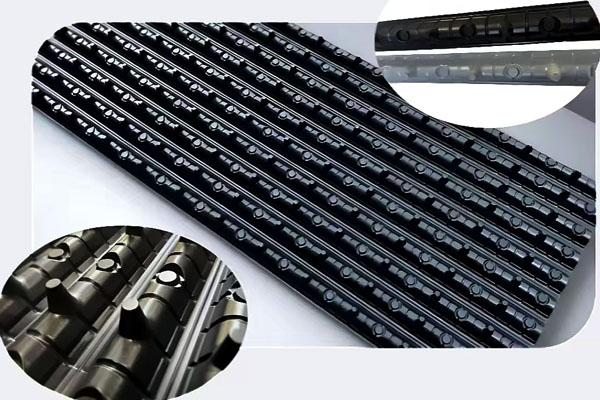
In modern industrial cooling systems, co
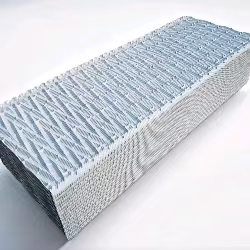
How to Calculate Cooling Tower Fill Volu
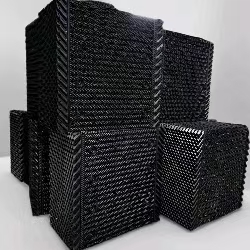
When the Original Cooling Tower Fill Is
Many cooling tower problems do not happen suddenly. In most cases, performance slowly decreases over months or even years before the system completely fails. One of the most common reasons behind this gradual decline is the aging or damaged Cooling Tower Fill.
For industrial facilities, commercial buildings, and power plants across Europe and North America, understanding the early warning signs of fill problems can help avoid unexpected downtime and expensive repairs.
The Cooling Tower Fill is often considered a simple internal component, but it plays a critical role in heat transfer efficiency. When the tower fill loses performance, the entire cooling system may consume more energy while delivering less cooling capacity.
Experienced engineers usually do not wait until the cooling tower completely loses capacity. They monitor small changes in operating conditions and inspect the Cooling Tower Media before major problems occur.
Cooling Tower Fill works by creating a large surface area where air and water can exchange heat. During normal operation, water spreads evenly across the fill surface while air passes through the internal channels.
Over time, several factors can reduce fill performance:
When these problems develop, the tower may still operate, but the efficiency gradually decreases. This is why regular inspection is more valuable than waiting for a complete failure.
One of the earliest signs of cooling tower fill problems is a gradual increase in outlet water temperature.
Many operators notice that the cooling tower used to achieve the required temperature easily, but after several years the same system struggles even under similar operating conditions.
Before increasing fan speed or pump flow, engineers should inspect the fill condition first. Reduced heat transfer inside the tower fill is often the real reason behind temperature increases.
Many facility managers notice rising electricity costs before they notice obvious cooling problems.
When Cooling Tower Fill becomes dirty or damaged, airflow resistance increases. The fan must work harder to move the required amount of air through the tower.
This creates a hidden operating cost that continues every day.
Modern Film Fill designs are developed to achieve a balance between:
A high-performance Film Fill Cooling Tower solution can improve cooling efficiency without unnecessarily increasing fan energy consumption.
Physical inspection is one of the simplest ways to evaluate Cooling Fill condition.
During maintenance shutdowns, engineers should check whether the fill blocks show:
These problems usually indicate material aging, chemical exposure, or mechanical stress.
When replacing damaged fill in a crossflow tower, engineers should confirm the original block dimensions and installation arrangement rather than selecting a product based only on appearance.
For replacement projects requiring different standard widths, 16.5 Multi-width Cross-flow Fill can provide a practical option for matching existing crossflow tower layouts.
Fouling is one of the most common problems affecting Cooling Tower Media performance.
Depending on the application, different materials can accumulate inside the fill:
When deposits build up, air cannot move freely and water cannot spread properly across the fill surface.
Film Fill provides excellent thermal performance, but applications with poor water quality may require a different approach.
For wastewater systems or applications with higher suspended solids, engineers should consider whether the existing fill structure is appropriate before simply replacing blocked media.
A healthy cooling tower should distribute water evenly throughout the fill area. Uneven water flow often indicates problems with the fill structure, nozzles, or water distribution system.
Poor distribution creates areas with excessive water and areas with insufficient wetting. Both situations reduce cooling efficiency.
Counterflow towers are sensitive to airflow resistance because air must move upward against falling water. Blocked or damaged fill can quickly affect performance.
Crossflow towers usually provide easier access for inspection, but uneven water distribution can still reduce efficiency if the fill structure is damaged.
For crossflow replacement projects, Multi-Specification Cross Flow Cooling Tower Fill can be considered when the existing tower requires a suitable combination of fill dimensions and specifications.
Replacing tower fill is a major maintenance decision. Before ordering replacement products, engineers should confirm:
Simply replacing old fill with the same product may not solve the original problem.
Many European and American industrial facilities operate older cooling towers. These systems often require specific fill dimensions because original components may no longer be available.
For retrofit projects, engineers should provide the existing fill dimensions and installation space before selecting replacement media. A product such as 1010mm-2500mm Cross Flow Cooling Tower Fill can be evaluated when its dimensions and structure match the existing crossflow application.
Custom Cooling Tower Fill can also be produced according to:
A properly matched solution improves installation efficiency and avoids unnecessary modifications to the existing tower structure.
There is no fixed replacement schedule. Service life depends on water quality, operating conditions, material selection, and maintenance practices.
Sometimes cleaning can improve performance, but severely damaged, deformed, or structurally weakened fill should normally be replaced.
Cooling Tower Fill rarely fails without warning. Higher water temperature, increased energy consumption, visible damage, fouling, and uneven water distribution are all signals that the fill system needs attention.
By identifying these early warning signs and selecting the correct Cooling Tower Media, engineers can reduce downtime, control energy costs, and maintain reliable cooling performance for many years. For replacement or retrofit projects, providing accurate tower information to the manufacturer is the first step toward selecting the right fill solution.
Cooling tower fill media updates and technical insights for global industrial clients.
In modern industrial cooling systems, cooling tower fill plays a critical role in improving heat exc
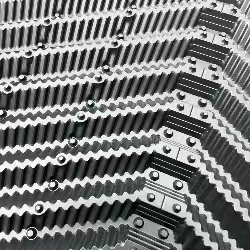
Why More Cooling Tower Fill Does Not Always Mean More CoolingWhen a cooling tower needs more cooling
Contact our team for cooling tower fill media details, quotations, and project support.
Chat on WhatsApp