
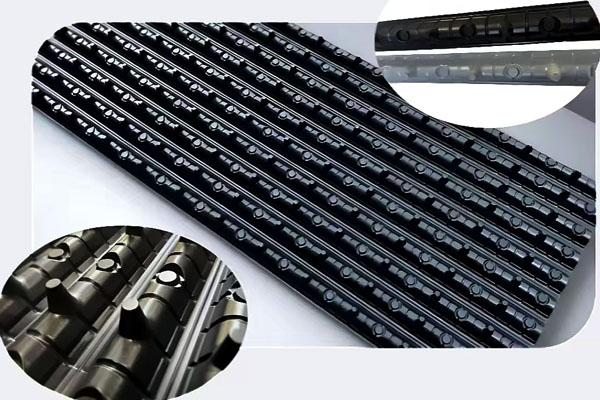
In modern industrial cooling systems, co
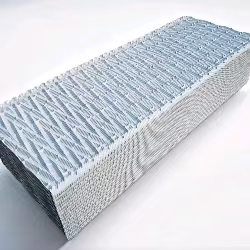
How to Calculate Cooling Tower Fill Volu
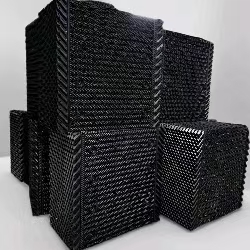
When the Original Cooling Tower Fill Is
Many industrial cooling towers in Europe and North America have been operating for decades. During this time, the original internal components may gradually lose performance due to aging, water quality issues, or changes in production requirements.
When a cooling tower starts losing efficiency, many facility managers consider replacing the entire tower. However, in many cases, a properly planned retrofit project with new Cooling Tower Media can improve thermal performance without the cost and downtime of installing a completely new system.
Replacing the internal Cooling Tower Fill may look like a simple maintenance task, but experienced engineers know that choosing the correct replacement fill requires careful evaluation of tower design, water conditions, airflow, existing dimensions, and operating goals.
A successful retrofit is not only about making the new fill physically fit inside the tower. The real goal is to restore or improve heat transfer efficiency while maintaining reliable operation for many years.
A cooling tower retrofit means upgrading or replacing selected components to improve system performance without replacing the entire cooling tower structure.
Typical retrofit projects may include:
Among these improvements, replacing old tower fill can be one of the most effective options because the fill directly influences the available air-water contact area and heat transfer process.
Even high-quality Cooling Tower Media will eventually experience performance changes after years of continuous operation.
When the fill structure becomes damaged, fouled, or deformed, water may no longer spread evenly and airflow passages can become restricted. The result can be lower cooling capacity, higher fan energy consumption, and increased maintenance requirements.
One of the most common mistakes in retrofit projects is selecting new Cooling Tower Fill only by matching the dimensions of the old product.
Dimensions are important, but they are not the only factors affecting cooling performance. Engineers should also evaluate:
A replacement fill with identical dimensions may not automatically provide better performance if the original fill design, water distribution, or operating conditions have changed.
Counterflow cooling towers require fill designs that support upward airflow while water moves downward through the fill.
The fill must provide stable air channels, effective water distribution, sufficient heat transfer area, and reasonable airflow resistance. When replacing counterflow fill, engineers should therefore evaluate the existing tower configuration rather than selecting a product based on dimensions alone.
Crossflow cooling towers have different airflow characteristics. Air enters horizontally through the fill while water moves downward through the fill section.
Because crossflow towers are commonly designed around specific fill widths and installation arrangements, dimensional compatibility becomes especially important during retrofit work.
For larger crossflow replacement requirements, 1470mm Width Cross-flow Fill can be considered when the existing installation requires a wider fill configuration.
The important point is that the replacement fill should match the available installation space, support structure, water distribution arrangement, and airflow path rather than simply being selected because it has a similar product name.
Material selection is one of the important decisions during a cooling tower retrofit.
The correct material depends on the operating environment rather than simply the purchase price. Water temperature, chemical exposure, water treatment quality, and expected service life should all be considered before selecting replacement Cooling Tower Media.
PVC is widely used in cooling tower applications because it offers a practical balance between thermal performance, manufacturing cost, and service requirements.
It is commonly considered for HVAC systems, commercial buildings, and general industrial cooling applications where water conditions and operating temperatures are within the applicable design range.
Some retrofit projects involve more demanding environments, including higher operating temperatures, aggressive water chemistry, or industrial processes with more severe operating conditions.
In these situations, engineers may evaluate PP as an alternative material because its properties can provide advantages in applications where chemical resistance and durability are important.
The material decision should always be based on the actual operating conditions rather than assuming that one material is automatically better for every cooling tower.
Film Fill is designed to create a large wetted surface area where circulating water forms a thin film across the fill sheets.
Advantages can include:
Film Fill is generally most suitable when water quality is sufficiently controlled to prevent excessive fouling and blockage of the internal flow channels.
Corrugated Fill uses formed sheets to create controlled flow paths for both air and water. The geometry of the corrugation influences water spreading, air movement, heat transfer, and pressure drop.
During a retrofit, engineers should therefore consider the complete fill geometry rather than treating sheet thickness or block dimensions as isolated specifications.
Not every cooling tower requires high-density film fill. Some systems operate with poorer water quality or higher levels of suspended solids, where fouling resistance and ease of maintenance may become more important than maximum compact heat transfer area.
In these applications, engineers may evaluate splash-type Cooling Tower Media according to the actual water conditions and tower design.
Many retrofit projects involve cooling towers built by manufacturers that are no longer available or systems installed many years ago. In these situations, the original fill may no longer be available as an exact replacement.
Custom Cooling Tower Fill allows engineers to work around existing tower dimensions while reducing unnecessary modifications to the supporting structure.
For crossflow towers requiring different installation widths or multiple dimensional options, 500/625/750mm Full-spec Cross-flow Cooling Tower Fill provides a practical reference for projects where the available fill width must be matched to the existing tower configuration.
Customization may include:
The purpose of customization is not simply to produce a different size. The replacement fill should work correctly with the existing water distribution, support structure, airflow path, and maintenance arrangement.
Crossflow retrofit projects can involve towers with different internal layouts, especially when the original equipment has been operating for many years.
Before ordering replacement Cooling Tower Fill, engineers should measure the actual installation area and confirm the required fill width, height, block arrangement, support method, and water distribution configuration.
For projects requiring a specific crossflow configuration within a defined width range, SteadyFlow 1000-1250 Cross-flow Fill can be evaluated according to the existing tower dimensions and replacement requirements.
This approach helps avoid a common retrofit problem: receiving a technically suitable fill product that cannot be installed efficiently because the block dimensions do not match the existing tower structure.
Before placing an order, engineers should collect accurate information from the existing cooling tower rather than relying only on old product records.
Accurate measurements allow the manufacturer to determine whether a standard configuration is suitable or whether customized Cooling Tower Fill should be produced.
A cooling tower retrofit is also a good opportunity to inspect other components that influence overall system performance.
Engineers should check the condition of the water distribution system, fill support structure, airflow passages, drift control components, and basin before installing new fill.
Installing new Cooling Tower Media without correcting a damaged support structure or poor water distribution system may prevent the new fill from achieving its expected performance.
Installing new Cooling Tower Fill is only the first step. Proper maintenance determines how long the upgrade will continue to deliver stable performance.
Not necessarily. The result depends on the condition of the existing fill, water distribution, airflow system, operating conditions, and the suitability of the replacement design.
Matching the original dimensions is an important starting point, but engineers should also verify tower type, airflow direction, water quality, support structure, and required thermal performance.
Not always. A fill with higher thermal performance may also require suitable water quality, airflow conditions, and water distribution. The best retrofit solution is the one that matches the complete operating system.
Cooling tower retrofit projects require more than simply replacing old plastic sheets. The correct Cooling Tower Fill selection should consider tower design, airflow direction, fill dimensions, material properties, water conditions, support structure, and long-term operating requirements.
For crossflow cooling tower retrofits, accurate dimensional matching is particularly important because the fill must work together with the existing water distribution and airflow arrangement. Selecting the correct Cooling Tower Media can help restore heat transfer performance, reduce unnecessary maintenance, and extend the useful life of an existing cooling tower without the expense of complete replacement.
```Cooling tower fill media updates and technical insights for global industrial clients.
In modern industrial cooling systems, cooling tower fill plays a critical role in improving heat exc
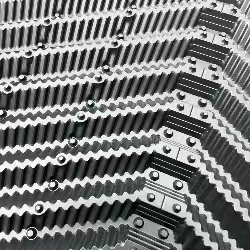
Why More Cooling Tower Fill Does Not Always Mean More CoolingWhen a cooling tower needs more cooling
Contact our team for cooling tower fill media details, quotations, and project support.
Chat on WhatsApp