
In modern industrial cooling systems, co
How to Calculate Cooling Tower Fill Volu
When the Original Cooling Tower Fill Is
For many cooling tower projects, film fill is the first product considered because of its compact structure and high heat-transfer surface. But purchasing decisions become different when the circulating water contains suspended solids, biological growth, debris, or other fouling risks.
In those applications, the question should not simply be which fill has the highest nominal surface area. The buyer should consider whether the fill structure is compatible with the actual water conditions and maintenance approach.
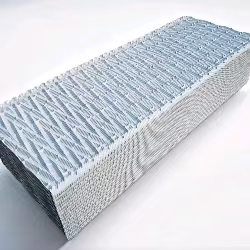
Closely structured film fill can provide a large contact area, but the internal passages also need to remain sufficiently open for water and air to move through the media.
If deposits progressively restrict the passages, the original design condition may no longer be maintained.
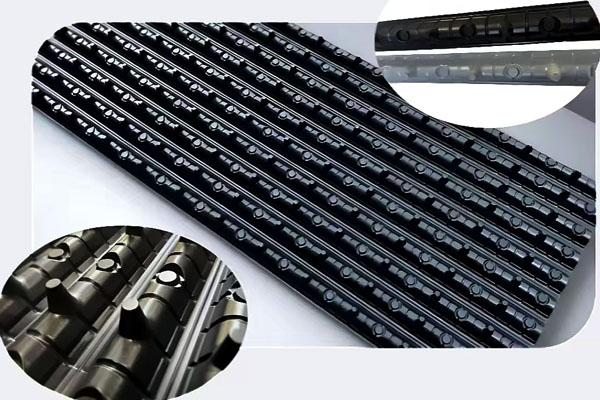
For projects with significant fouling concerns, Splash Grid Fill for Fouling-Prone Cooling Towers can be considered as an alternative product configuration.
| Consideration | Film Fill | Splash Grid Fill |
|---|---|---|
| Typical Structure | Closely formed heat-transfer passages | More open splash-oriented structure |
| Water Quality Concern | Best evaluated where passages can remain adequately open | Can be considered for more challenging fouling conditions |
| Purchasing Priority | Thermal configuration and dimensions | Fouling tolerance and maintenance conditions |
| Replacement Check | Geometry, dimensions and water distribution | Structure, support and water conditions |
Visible dirt in a cooling tower basin does not automatically mean that a different fill type is required.
The buyer should look at the type and amount of suspended material, scaling tendency, biological growth, oil contamination, cleaning practices, and actual condition of the existing fill.
The goal is to match the fill structure with the operating environment rather than choosing a product based on one observation.
If circulating water is adequately treated and the existing fill remains relatively clean, a film-fill configuration may continue to be appropriate.
For cross-flow applications, products such as Cross-flow Cooling Tower Fill (Double-wave Design) can be evaluated when the tower requires a defined cross-flow film-fill structure.
A larger nominal surface area does not automatically make one fill type appropriate for every tower. The actual water quality, airflow, water loading, maintenance practices, and installation configuration all matter.
For procurement teams, the better question is: Which fill structure can remain suitable under this tower's actual operating conditions?
No. Its suitability depends on the complete tower application. Fouling risk is one reason buyers may consider a more open fill structure.
Not automatically. The source and severity of the scaling should be identified first, because water treatment and maintenance conditions can also affect fill life.
Potentially, but the existing fill condition and the new operating conditions should be reviewed before making the purchasing decision.
Cooling tower fill media updates and technical insights for global industrial clients.
In modern industrial cooling systems, cooling tower fill plays a critical role in improving heat exc
When Should a Buyer Consider Splash Grid Fill Instead of Film Fill?For many cooling tower projects,
Contact our team for cooling tower fill media details, quotations, and project support.
Chat on WhatsApp