
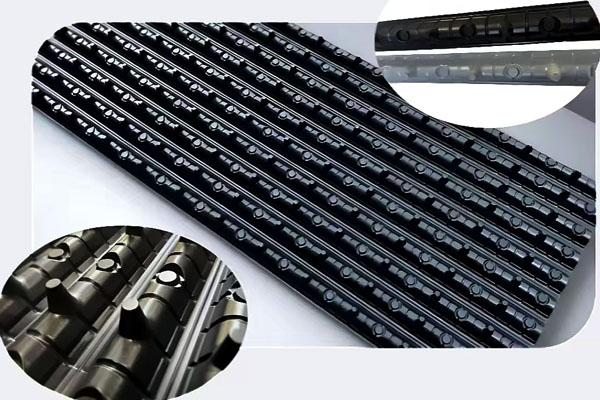
In modern industrial cooling systems, co
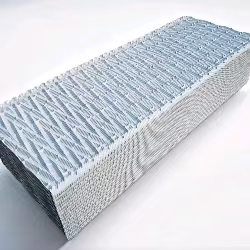
How to Calculate Cooling Tower Fill Volu
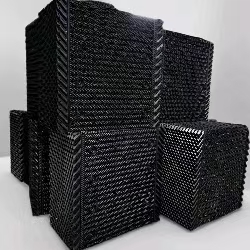
When the Original Cooling Tower Fill Is
When selecting cooling tower fill, buyers often focus on material, fill type, and dimensions. Sheet thickness is also important because it affects structural stability, airflow, cleaning resistance, and service life.
The correct thickness is not simply the thickest option. It should match the tower design, operating temperature, water quality, and fill structure.
Film Fill must maintain its designed channels during operation. If sheets deform or sag, water distribution and airflow can change, reducing cooling performance.
Suitable thickness provides better resistance to deformation, especially under higher temperatures, heavy water loading, or frequent cleaning.
Sheet thickness can affect the open area of the fill, but pressure drop depends on the complete geometry. Pitch, flute design, fill height, air velocity, and water loading are also important.
For this reason, thickness should always be evaluated as part of the complete Cooling Tower Media specification.
For cross-flow cooling towers, sheet thickness should be considered together with fill width and block arrangement. A suitable thickness is not useful if the finished block does not fit the existing tower.
For installations requiring flexible width options, Dual-width Adaptable Cross-flow Fill can be considered according to the existing installation layout.
For projects using a 1010 mm installation width, 1010mm Width Cross-flow Fill provides a defined dimensional option for replacement projects.
Different cooling towers may require different fill widths. Wider sections should be selected according to the existing support structure and installation space.
For wider cross-flow applications, 1470mm Width Cross-flow Fill can be evaluated when the tower layout requires a wider fill section.
Where several standard widths are required, 500/625/750mm Full-spec Cross-flow Cooling Tower Fill provides multiple width options for different replacement requirements.
For larger fill sections, SteadyFlow 1000-1250 Cross-flow Fill offers another specification range for large cross-flow tower applications.
A thicker sheet is not automatically a better solution. The final selection should consider:
For replacement projects, provide the supplier with the cooling tower type, existing fill dimensions, operating temperature, water quality, current material, and photos of the installation.
If the required thickness is already known, include it in the specification. If not, the supplier should recommend the thickness based on the actual operating conditions rather than simply supplying the thickest available sheet.
Sheet thickness is only one part of a reliable cooling tower fill design. The better approach is to match thickness, material, geometry, dimensions, airflow, and operating conditions as one system.
For retrofit projects, accurate measurements and real operating data are the safest basis for selecting replacement Cooling Tower Media.
The right fill thickness helps maintain structural stability and long-term performance, but thicker does not always mean better. A reliable replacement should be selected according to the complete tower design and actual operating conditions.
When selecting cooling tower fill, buyers often focus on material, fill type, and dimensions. Sheet thickness is also important because it affects structural stability, airflow, cleaning resistance, and service life.
The correct thickness is not simply the thickest option. It should match the tower design, operating temperature, water quality, and fill structure.
Film Fill must maintain its designed channels during operation. If sheets deform or sag, water distribution and airflow can change, reducing cooling performance.
Suitable thickness provides better resistance to deformation, especially under higher temperatures, heavy water loading, or frequent cleaning.
Sheet thickness can affect the open area of the fill, but pressure drop depends on the complete geometry. Pitch, flute design, fill height, air velocity, and water loading are also important.
For this reason, thickness should always be evaluated as part of the complete Cooling Tower Media specification.
For cross-flow cooling towers, sheet thickness should be considered together with fill width and block arrangement. A suitable thickness is not useful if the finished block does not fit the existing tower.
For installations requiring flexible width options, Dual-width Adaptable Cross-flow Fill can be considered according to the existing installation layout.
For projects using a 1010 mm installation width, 1010mm Width Cross-flow Fill provides a defined dimensional option for replacement projects.
Different cooling towers may require different fill widths. Wider sections should be selected according to the existing support structure and installation space.
For wider cross-flow applications, 1470mm Width Cross-flow Fill can be evaluated when the tower layout requires a wider fill section.
Where several standard widths are required, 500/625/750mm Full-spec Cross-flow Cooling Tower Fill provides multiple width options for different replacement requirements.
For larger fill sections, SteadyFlow 1000-1250 Cross-flow Fill offers another specification range for large cross-flow tower applications.
A thicker sheet is not automatically a better solution. The final selection should consider:
For replacement projects, provide the supplier with the cooling tower type, existing fill dimensions, operating temperature, water quality, current material, and photos of the installation.
If the required thickness is already known, include it in the specification. If not, the supplier should recommend the thickness based on the actual operating conditions rather than simply supplying the thickest available sheet.
Sheet thickness is only one part of a reliable cooling tower fill design. The better approach is to match thickness, material, geometry, dimensions, airflow, and operating conditions as one system.
For retrofit projects, accurate measurements and real operating data are the safest basis for selecting replacement Cooling Tower Media.
The right fill thickness helps maintain structural stability and long-term performance, but thicker does not always mean better. A reliable replacement should be selected according to the complete tower design and actual operating conditions.
Cooling tower fill media updates and technical insights for global industrial clients.
In modern industrial cooling systems, cooling tower fill plays a critical role in improving heat exc

How Fill Surface Structure Shapes the Working Pattern of a Cooling Tower Fill PackA Cooling Tower Fi
Contact our team for cooling tower fill media details, quotations, and project support.
Chat on WhatsApp